

ACADEMIC PUBLISHING INDABA
"Charting the Emerging Frontiers of Scholarly Communication"
25-26 July, 2024 @ HOTEL SKY, SANDTON
The traditional academic publishing paradigms have been increasingly supplemented, and in some cases supplanted by digital platforms. This transformation has had far-reaching implications for the accessibility, impact, and interactivity of research findings, helping to bridge the knowledge gap between academic and non-academic communities.
Additionally, there are new innovations in the way scholarly content is created and presented. Writers can now incorporate citation management softwares, multimedia elements, interactive figures, and other digital enhancements to enrich the reader’s overall experience and comprehensibility of complex findings. Open-access journals and repositories have also emerged, making research freely available to anyone with an internet connection.
However, the next generation scholarly writing also brings forth challenges. The proliferation of predatory journals, the ease with which anyone can publish online and the pressure to publish often and quickly can sometimes compromise the rigorous peer-review processes and quality control that gives credibility to academic publishing. As technology continues to evolve, the scholarly publishing landscape will likely undergo further disruption, and it is crucial for academia to adapt and address these pitfalls.
The Academic Publishing Indaba is set to explore this contemporary ecosystem of scholarly communication, highlighting the challenges, opportunities, and cutting-edge innovations that define it, from AI-driven editorial workflows to blockchain-based peer review systems.
The interdisciplinary gathering of leading academics, publishers, librarians, and technology innovators will aim to produce a set of actionable recommendations that can create a roadmap for improving and embracing technological advancements as well as ethical standards in scholarly communication.
Spotlight will also be on of data reproducibility challenges, as well as the sustainability and funding of open access model to make sure that academic writing can continue to thrive without compromising on quality. Whether you are an early-career researcher seeking guidance on navigating the publication process or a seasoned editor looking to stay abreast of the latest developments in academic publishing, this conference promises to be an invaluable forum for learning, sharing, and advancing the frontiers of knowledge dissemination.
CONFIRMED SPEAKERS

Allison Levy

Marco van der Merwe

Prof Jen webb

Prof Johannes Cronje
Prof Keyan Tomaselli
Prof Makobetsa Khati
Prof Nyasha Mboti

Prof Serges Kamga
Siphethile Gcukumana
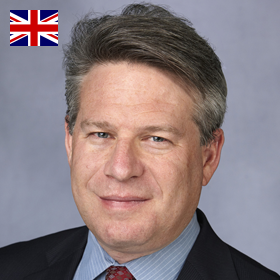
Prof Gregory Brown
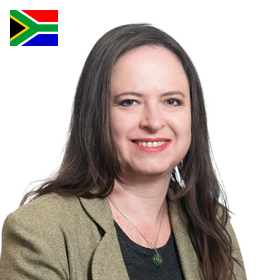
Prof Elizabeth Le Roux
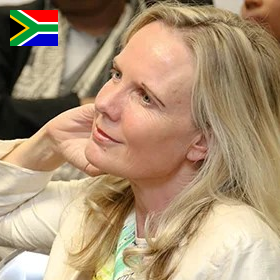
Sarah Nuttall

Dr Francois van Schalkwyk

Isak van der Walt
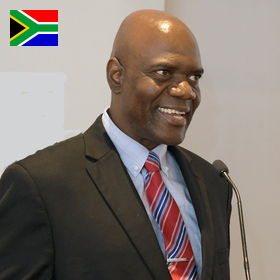
Prof Arthur Mutambara

Prof Thea van der Westhuizen
Director Brown University Digital Publications, USA
Allison Levy
Allison Levy is Director of Brown University Digital Publications, a program of distinction based in the University Library’s renowned Center for Digital Scholarship.
Launched with generous support from the Mellon Foundation and further supported by the National Endowment for the Humanities and the Institute of Museum and Library Services, BUDP provides a novel and intentional university-based approach to digital content development that is helping to set the standards for the future of scholarship in the digital age. In her role as director, Levy brings together key organizational, academic, and technological resources to support new forms of faculty-authored scholarship, resulting in pathbreaking, award-winning publications. She also spearheads efforts at the industry level to advance the conversation around the development, evaluation, and publication of born-digital scholarship in the humanities. A hallmark of BUDP under her leadership is the centering of access and inclusion in the practice and production of digital scholarship, as exemplified by the NEH Institute on Advanced Topics in the Digital Humanities Born-Digital Scholarly Publishing: Resources and Roadmaps, for which she served as project director. Levy, who holds a PhD in history of art from Bryn Mawr College, is the author of numerous books on early modern visual culture. She has served as founding general editor of two scholarly book series and as co-chair of the College Art Association’s Committee on Research and Scholarship. She has held teaching appointments at University College London, Wheaton College, and Tulane University. Her research has been funded by the American Association of University Women, the Whiting Foundation, and the NEH, among others.
Partner and Head of the Trademark Department – Spoor & Fisher
Marco van der Merwe
Marco van der Merwe is a partner at the law firm Spoor & Fisher where he specialises in trade mark prosecution, domain names, copyright and related intellectual property law. Prior to joining Spoor & Fisher he was employed as a computer scientist at UNISA. Apart from his legal practice, he is responsible for the management of the Trade Mark Department. He was admitted to practice as an Attorney of the High Court in South Africa in 1993 and is a former Vice President and Treasurer of the South African Institute of Intellectual Property Law. Marco was awarded the Butterworths prize for the best contribution to de Rebus by a practicing attorney for an article entitled “Protection of trade marks, company names and trading styles as domain names”. In 1999 Microsoft Corporation awarded him the “Best Practices Award” for software infringement investigation and audit. He authored the chapter on “Computer Contracts” for Butterworths Forms and Precedents and is a co-author of the first edition of “Cyberlaw@South Africa” where he contributed the chapter pertaining to “Contracting on the Internet”. Marco is the co-author of Lawsa Vol 42(3ed) – Trade Marks as well as the publication entitled “Introduction to Intellectual Property Law” edited by Dean & Dyer and published by Oxford University Press.
Dean: Graduate Research Office – University of Canbera, and executive member of the Association of Australasian Writing programs, Australia
Prof Jen webb
Jen Webb is Distinguished Professor of Creative Practice, and Interim Dean of the Faculty of Arts and Design at the University of Canberra. Recent books include Art and Human Rights: Contemporary Asian Contexts (Manchester UP, 2016); Gender and the Creative Labour Market(Palgrave 2022), and the poetry collections Moving Targets (Recent Work Press, 2018), Flight Mode (with Shé Hawke; RWP, 2020), and The Daily News (RWP 2024). She is co-editor of the literary journal Meniscus and the scholarly journal Axon: Creative Explorations. Her scholarly work focuses on the ethics of representation, and on the field of creative practice; her poetry focuses on material poetics and questions of seeing and being.
Digital Teaching & Learning – Cape Peninsula University of Technology
Prof Johannes Cronje
Johannes Cronjé is a professor of Digital Teaching and Learning in the Department of Informartion Technology at the Cape Peninsula University of Technology. Prior to that he was the Dean of Informatics and Design. He has supervised more than 150 Masters’ and Doctoral students and published more than 87 peer reviewed papers on topics such as mobile and blended learning, academic writing, and instructional design. He is a sought-after international keynote speaker and has been a visiting professor at seven universities internationally. He is also a pioneer in triangulating the affordances, limitations and boundaries of AI in writing. As an example, he has instructed his students to write a structured literature review using ChatGPT, and used one of the papers to demonstrate how important it is for the author to remain in control of the process
Chair: Committee on Scholarly Publishing in South Africa
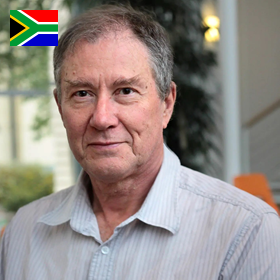
Prof Keyan Tomaselli
Keyan Gray Tomaselli is chair of the Academy of Science for South Africa’s Scholarly Publication Committee, an honorary fellow of the SA Communication Association, Professor Emeritus and Fellow at the University of KwaZulu-Natal, where he established and operated its Centre for Communication, Media and Society for 29 years until becoming a Distinguished Professor of Humanities at the University of Johannesburg. He is also editor of the UKZN-UJ journal Critical Arts: South-North Cultural and Media Studies, and co-editor at UJ’s journal Journal of African Cinemas. He is also a published author and has been largely collected by libraries, having written extensively on the South African film Industry, and acted as a script consultant.
Executive Director: Research Chairs and Centres of Excellence – National Research Foundation (NRF)
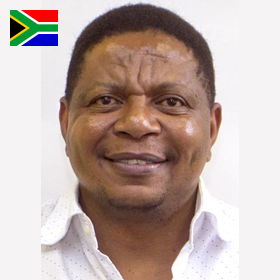
Prof Makobetsa Khati
Dr Khati is the Executive Director of the Research Chairs and Centres of Excellence directorate at the National Research Foundation.Heholds a BSc Honours in Public Health from the University of Cape Town. He completed his MSc at Imperial College London and his DPhil in Molecular Pathology at Oxford University where he subsequently was also a post-doctoral fellow at the Sir William Dunn School of Pathology. In addition, he was a Visiting Scientist at the Scripps Research Institute in San Diego, California. Dr Khati spent 10 years at the Council for Scientific Industrial Research (CSIR), first as Research Group Leader and later as Head of Department at the Emerging Health Technology unit. He also worked at the Institute for Infectious Diseases at UCT where he currently holds an Honorary Professorship.
Head of Department: Communication Science – University of the Free State
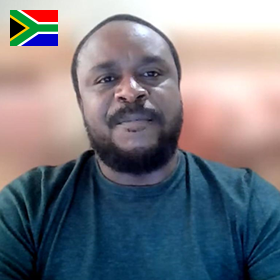
Prof Nyasha Mboti
Prof Nyasha Mboti is Head of the Department of Communication Science and Associate Professor at the University of the Free State (UFS). Prof Mboti loves to teach and has been doing so for 17 years at university level, graduating 10 PhDs and 10 master’s students. He is the founder of the new field of Apartheid Studies, which utilises, elaborates, and develops the notion of ‘apartheid’ as a theoretical framework and paradigm. His book on the topic, Apartheid Studies: A Manifesto (Africa World Press), has just been published
Member of the Editorial Board: Pretoria University Law Press
Prof Serges Kamga
Serges Djoyou Kamga is a full Professor of Human Rights Law and the Dean of the Faculty of Law at the University of the Free State. He is a member of Pretoria University Law Press’ Editorial Board, and co-director of the Cross-Cultural Human Rights Centre at the Free University of Amsterdam in the Netherlands, and has had engagements at the United States Agency for International Development (USAID), the Young African Leaders Initiative, and at African Legal Sources at the University of Pretoria. He is also a member of the Executive Committee of the International Association of Constitutional Lawyers. Prof Kamga previously worked at the Thabo Mbeki African School of Public and International Affairs (UNISA), the Centre for Human Rights (University of Pretoria) and at the South African Institute for Advanced Constitutional Law (SAIFAC), a Centre of the University of Johannesburg. He is the author/editor/co-editor of 10 books and 70 articles/book chapters. Prof Kamga has received several research grants and awards including the prestigious Ali Mazrui Award for Scholarship and Research Excellence for 2021.
Manager: Knowledge Management & Information Services – Council for Scientific & Industrial Research
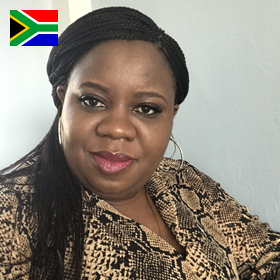
Siphethile Gcukumana
Siphethile Gcukumana is a knowledge management & Information specialist at the Council for Scientific and Industrial Research (CSIR), South Africa, with over 15 years of professional experience in her field. Currently, she is engaged in providing research and scholarly communication support to Science, Engineering, and Technology (SET) researchers, empowering them to excel in their research endeavors. Her expertise has earned her recognition as a member of several Information Professionals associations, where she actively contributes to the advancement of her field.
Siphethile holds a Master of Science in Information Technology, her research interests are multifaceted, reflecting her passion for fostering open knowledge and data (open science), promoting robust scholarly communication practices, and advocating for research practices that embrace diversity and inclusivity.
General Editor – Oxford University Studies in Enlightenment, UK
Prof Gregory Brown
Gregory Stephen Brown is currently general editor of Oxford University Studies in the Enlightenment, published by the Voltaire Foundation of the University of Oxford, where he is a Senior Research Fellow. He is an American historian of European culture from the age of Enlightenment and democratic revolutions to the present day. He has published numerous books and articles on political and cultural institutions in France and Europe. He teaches courses on European and World History, focusing on political culture, urban history, and democratic ideals. His research regards “Enlightenment France and issues of ‘self-fashioning,’ performance and printing, patronage, and censorship. Gregory has also served on the campus and state board of the Nevada Faculty Alliance, which is the Nevada conference of the American Association of University Professors, serving as president from 2010 – 2012. From 2012 – 2016, he served as Vice Provost of University of Nevada, Las Vegas with responsibility for faculty affairs, academic and research policy and strategic planning.
Coordinator: Publishing Studies – University of Pretoria
Prof Elizabeth Le Roux
Elizabeth Le Roux is an Associate Professor and Coordinator of Publishing Studies in the Department of Information Science at the University of Pretoria. She was formerly employed in the scholarly publishing sector, most recently as Director of Unisa Press. She coordinates the Publishing Studies degrees, and supervises master’s and doctoral students. Her research focuses on the history of publishing and print culture in Southern Africa, and she coordinates the industry research for the Publishers’ Association of South Africa. She is a member of the Advisory Board for Wits University Press and an Honorary Member of the Academic and Non-Fiction Authors’ Association of South Africa.
Professor of Literary and Cultural Studies and has been the Director of WiSER
Sarah Nuttall
Sarah Nuttall is Professor of Literary and Cultural Studies and has been the Director of WiSER from 2012. She is the author of Entanglement: Literary and Cultural Reflections on Postapartheid, editor of Beautiful/Ugly: African and Diaspora Aesthetics, and co-editor of many books including Negotiating the Past: The Making of Memory in South Africa; Senses of Culture; Johannesburg: The Elusive Metropolis and Loadshedding: Writing On and Over the Edge of South Africa. She has given more than thirty keynote addresses around the world, and published more than sixty journal articles and book chapters. Her work is widely cited across many disciplines. She has recently co-edited a special issue of Interventions with Isabel Hofmeyr and Charne Lavery on ‘Reading for Water’ , edited Your History with Me: The Short Films of Penny Siopis (Duke University Press), co-edited Hinterlands: Extraction, Abandonment, Care (Palgrave) and is the author of the forthcoming book On Pluviality: Reading for Rain. She has taught at Yale and Duke Universities and in 2016 she was an Oppenheimer Fellow at the DuBois Institute at Harvard University. For over ten years she has directed WiSER, the largest and most established Humanities Institute across the Global South.
Managing Editor: African Minds
Dr Francois van Schalkwyk
François is the founder and managing editor of the open access scholarly book publisher African Minds. He is also a researcher at CREST, Stellenbosch University, and a fellow at CORD, University of Arizona. He has published on topics such as university presses in Africa, preprints and preprint platforms, open access and predatory book publishers, among others. He is an associate editor of the journal Learned Publishing and a member of ASSAf’s National Scholarly Book Publishers’ Forum (NSBPF) of South Africa.
Deputy Director: Scholarly Communications & Digital Systems – University of Pretoria
Isak van der Walt
Isak is passionate about leveraging technology to drive meaningful change in higher education. With a deep understanding of the intersection between technology and academia, he brings a wealth of expertise in designing and implementing innovative programs that help educators and researchers stay ahead of the curve.
His experience in the field of digital scholarship spans a range of disciplines, including data analysis, visualization, and digital humanities. Whether working with faculty members to develop new research methodologies or collaborating with students to explore cutting-edge tools and technologies, Isak is dedicated to fostering a culture of innovation that empowers individuals and drives progress.
At the core of his approach is a commitment to collaboration and partnership, both within the academic community and beyond. By forging strong relationships with industry leaders, community organizations, and other institutions, he is able to identify emerging trends and opportunities and harness them to achieve real-world impact.
Director: Institute for the Future of Knowledge – University of Johannesburg
Prof Arthur Mutambara
Professor Arthur G.O. Mutambara is the Director and Full Professor of the Institute for the Future of Knowledge (IFK) at the University of Johannesburg (UJ) in South Africa. He is a world-renowned roboticist, academic, author, Pan-Africanist and technology strategist. Professor Mutambara is also the Director of IFK’s Decentralised Artificial Intelligence and Control Systems (DAICS) Research Group and drives the African Agency in Public Health (AAPH) initiative within the Future of Health (FoH) Research Group. He teaches Control Systems in UJ’s Mechanical Engineering and Electrical and Electronic Engineering Departments. He has taught Controls Systems at MIT Aeronautics Astronautics Department (Course 16) and FAMU-FSU College of Engineering, both in the United States.
Professor Mutambara is the Former Deputy Prime Minister of Zimbabwe. Mutambara was one of the three Principals who created and led the Government of National Unity (GNU) from 2009 to 2013. As the Deputy Prime Minister, his key functions included assisting the Prime Minister in policy formulation by the Cabinet and supervision of policy implementation by the Council of Ministers. He also specifically supervised the Ministries under the Infrastructure Cluster, such as Energy and Power Development, Transport and Infrastructure, Information Communication Technologies, Water Resources and Development, and Public Works.
Academic Leader: High Impact Community Engagement & Internationalisation – University of KwaZulu-Natal
Prof Thea van der Westhuizen
Prof Thea van der Westhuizen is an award-winning academic leader, renowned for driving entrepreneurship in academia through innovative teaching and transformative research. She founded SHAPE, earning international recognition at The Innovative Youth Incubator Awards. As the former International Director of Paddle for the Planet, she advocates for global environmental sustainability and enabling youth. With over 2 decades of international experience in corporate and academic sectors, her impactful collaborations span across high-impact leaders, municipality managers, CEOs of multinational companies and helping youth entrepreneurs. Her remarkable career showcases her entrepreneurial spirit and commitment to excellence. She currently serves as an academic citizen at the University of KwaZulu-Natal, School of Management, Information Technology & Governance.
PRELIMINARY AGENDA
FIRST DAY: THURSDAY, 25 JULY
Registration & Welcome Refreshments
Welcome remarks by Fireside Conversations and conference chair
With the vast amount of scholarly content available online, discoverability and visibility are key challenges for researchers and
publishers. This session will explore strategies for enhancing the discoverability of scholarly content through metadata optimization, search engine optimization (SEO), and social media engagement. The session will also explore strategies for building online profiles, engaging with followers, and measuring impact.
Through a review of literature, this presenta-tion assesses the impact and necessity of institutional instruments such as writing centres by exploring the range of services they offer, including consultations, workshops, and feedback provision. The study highlights benefits such as fostering a vibrant writing culture, addressing writing challenges, and aiding multilingual scholars. It aims to provide insights into the role of writing centers in universities’ research missions and inform
decisions on institutional support for scholarly publication initiatives.
This presentation seeks to locate SA within the global publication ecosystems and draw the complex links in SA between the funding and regulatory bodies such as ASSAf, DHET, DSI, NRF, DSAC, SACO, CREST and how these ministries and their contracted academic consultancies (CREST, SACO) monitor, shape and sometimes complicate outcomes. This funding/regulatory/monitoring/incentive framework then needs to be examined in relation to: (a) internal university resource allocation and how they interpret the national policy; and (b) the rapidly shifting digital environment, the headlong rush into open access, which has open the doors to the predators (cloned and fake journals, paper mills, article brokers and all those miscreants documented by Retraction Watch)allocation and how they interpret the national policy; and (b) the rapidly shifting digital environment, the headlong rush into open access, which has open the doors to the predators (cloned and fake journals, paper mills, article brokers and all those miscreants documented by Retraction Watch)
Networking Coffee/Tea Break
- Comparative reflections when thinking about publishing specifically in Southern contexts
- Some of the limitations of publishing in the North
- What historical and archival studies do we need to better understand the routes that Publishing from the South has taken?
Collaborative publishing models, such as library-led publishing initiatives and consortia-based publishing platforms, are gaining traction in the digital era. This paper explores the significance and benefits of purposeful collaborative efforts between research libraries and university presses, emphasizing the clarity of intentions in
fostering such partnerships. It discusses the potential outcomes and advantages for both entities, including enhanced scholarly communication, increased dissemination of research outputs, and optimized resource
allocation.
Networking Lunch
Brown University Digital Publications is breaking new ground in creating born-digital scholarly monographs, fully peer-reviewed and
published by leading university presses that take full advantage of the digital environment to advance long-form scholarly arguments in ways that could never be rendered in a conventional book. Opening new horizons for
intellectual dynamism and innovation, digital scholarship has become an area of an established if continuously evolving aspect of 21st-century academic practice. Enabling scholars to think in different ways about
important questions or take up new questions that may not have previously been possible, digital scholarship has significantly extended the reach and impact of research and learning. Widely recognized as accessible, intentional, and inclusive, Brown University’s novel, university-based approach to digital content development is helping to set the standards
for the future of scholarship in the digital age.
In a hyperconnected world filled with Large Language Models we need a new approach to information literacy. This talk will consider the use of artificial intelligence throughout the research process, and show how AI can be used for:
- Brainstorming
- Discovery
- Classification and
- Categorisation
- Analysis
- Production and dissemination
- Understanding the cultural nuances in writing for an international audience
- Incorporating diverse perspectives to enrich the manuscript’s appeal
- Strategies for clear and effective communication across language barriers
- Navigating differences in academic standards and expectations worldwide
- Leveraging inclusive language and inclusive content to resonate with diverse readership
- Addressing potential biases and assumptions in the manuscript to ensure broad relevance
- Engaging with international reviewers: tips for fostering constructive feedback and collaboration
Conference chair’s recap and closing remarks
SECOND DAY: FRIDAY, 26 JULY
Event Check-In and Registration
Event Check-In and Registration
- How has the landscape of academic publishing changed due to open access publishing
- What are the financial implications of open access publishing?
- What are transformative agreements and why are they important?
- What role should universities, libraries and research offices be playing to ensure that open access publishing is equitable for
scholars in the global south?
Community-driven “Diamond Open Access” models aim to provide free access to scholarly publications, addressing inclusivity, diversity,
and transparency issues. These models have transformative potential, particularly in the Global South, emphasizing collaboration and
government investment to improve the academic publishing landscape. By adopting non-commercial Diamond Open Access, countries can enhance visibility and recognition for their research contributions globally,
promoting equity and sustainability in knowledge sharing.
Through a review of literature, this presenta-tion assesses the impact and necessity of institutional instruments such as writing centres by exploring the range of services they offer, including consultations, workshops, and feedback provision. The study highlights benefits such as fostering a vibrant writing culture, addressing writing challenges, and aiding multilingual scholars. It aims to provide insights into the role of writing centers in universities’ research missions and inform decisions on institutional support for scholarly publication initiatives.
Researchers began experimenting with ChatGPT since it was released in November 2022, looking at ways how they could benefit, and how it could support writing systematic
reviews, literature searches, summarising academic articles, etc. which many publishers wanted to reject before the trend gained traction. Some publishers were quick to react, updating their respective editorial and publishing policies, stating unconditionally that ChatGPT can’t be listed as an author on an academic paper.
There were also those publishers who addressed this ‘grey area’ differently regarding the question of whether ChatGPT can be used for assistance in the research process through the level of detail and clarity of their policies. Others are taking a proactive approach to defining guidelines on the proper use of AI technologies and consider the possibility that ChatGPT could implement an ‘assisted-driving approach promising to free researchers’ time from the burden of scientific writing and free up their time for other research and science activities. Another issue is whether traditional plagiarism checkers have caught up to AI detection and can those tools be fooled in
some way or another.
- Often, the easier component of copyright litigation relates to proving infringement.
- However, proving the subsistence and ownership of copyright when taking legal action, can be a stumbling block.
- Presenting a checklist for how to approach copyright litigation before committing to it.
- Practical application of the steps with reference to case law and examples encountered in practice.
- Interactive and dynamic visualisations
- Multimedia integration
- Augmented reality and virtual reality
- Artificial inteligece and machine learning
- Open access and open data
Collaborative publishing models, such as library-led publishing initiatives and consortia-based publishing platforms, are gaining traction in the digital era. This paper explores the significance and benefits of purposeful collaborative efforts between research libraries and university presses, emphasizing the clarity of intentions in fostering such partnerships. It discusses the potential outcomes and advantages for both entities, including enhanced scholarly communication, increased dissemination of research outputs, and optimized resource
allocation.
This presentation aims to serve as a platform for collective reflection and action, bringing together stakeholders from around the world
to envision a more inclusive and equitable future for scholarly communication.The speaker will delve into the systemic inequalities
within academic publishing, exploring how certain regions, scholars, and institutions face disproportionate barriers to access, visibility,
and recognition. He will also examine the root causes of this divide, considering factors such as economic disparities, linguistic barriers, and biases in scholarly evaluation systems.
Preprint Review and Curation Systems in Advancing Publishing Innovation
In a hyperconnected world filled with LargeLanguage Models we need a new approach to information literacy. This talk will consider theuse of artificial intelligence throughout the research process, and show how AI can be
used for:
- Brainstorming
- Discovery
- Classification and Categorisation
- Analysis
- Production and dissemination
- The influence of fresh policies, shifting researcher and institutional demands, coordinated backing for open infrastructure, and other transformations on the open data movement and its advocates
- Investigating the prospects and obstacles arising from emerging technologies like machine learning, automation, and decentralized data storageHighlighting the continuing importance of generalized data infrastructures in the rapidly evolving research terrain, and the necessity for adaptation through collaborative ventures
and partnerships